Project Gallery 📸
LEA Primary School Garden
Location
Ebitu Ukiwe, Jabi, Abuja
Year
2024
Project Type
Food Garden
Duration
10th - 21st June 2024
Project Overview
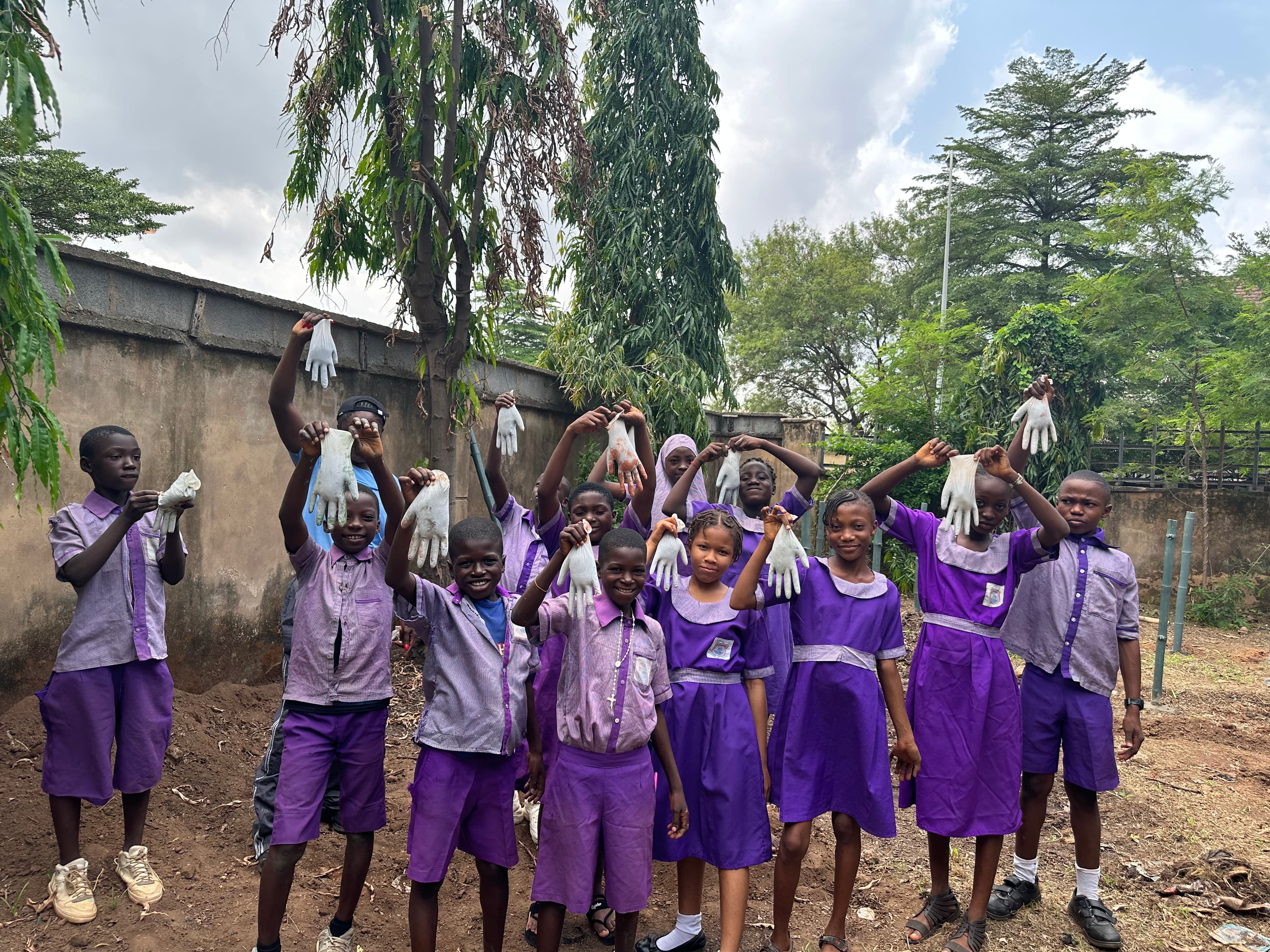
In June 2024, Greener Cities Collective transformed a 50m x 20m section of LEA Primary School into a vibrant learning garden that promotes environmental education, food security, and community building.
Funded by the French Embassy in Nigeria as part of World Environment Day 2024, the project engaged 150 pupils, 6 teachers, and 20 volunteers in creating a practical and artistic green space.
Key Facts
Garden Area: 50m x 20m (planted area ~40%)
Participants: 150 pupils, 6 teachers, 20 volunteers
Edible Crops: Okra, Spinach, Carrot, Ewedu, Corn, Hibiscus, Basil, Ugwu
Fruit Trees: Orange, Pawpaw, Guava, Mango, Pomegranate
Ornamentals: Sun Roses, Oxalis
Waste Materials Used: Interlocks, bamboo, broken tiles, PVC boards, and car tyres
Process & Approach
Planning
After visiting multiple schools, LEA was selected based on impact potential, available space, and access considerations. The garden was located behind the administrative block for monitoring and security.
Design
The team designed butterfly-inspired beds, an orchard area, raised beds made with reused interlocks and bamboo, and a bamboo seating zone under an existing tree.
Implementation & Engagement
The site was cleared, zones were marked, and pupils and volunteers planted crops and trees. Students were grouped by class for ongoing maintenance while teachers and volunteers supported supervision and technical setup.
Creative Expression
Discarded materials were turned into colorful decor and functional garden features, helping students connect food production with creativity and ownership.
Impact & Outcomes
0
Pupils Engaged
0
Volunteers Engaged
0m x 0m
Garden Area
0 weeks
Timeline
Lessons Learned
What worked: Rainy-season timing supported crop survival, and volunteer support plus school buy-in helped the garden remain productive during school breaks.
Challenges: Tight timelines, uneven leadership commitment, fluctuating student participation, and dry-season water limitations affected consistency.
Recommendations: Set realistic timelines, define roles early through a school committee, include community members in design, and confirm reliable water supply before implementation.